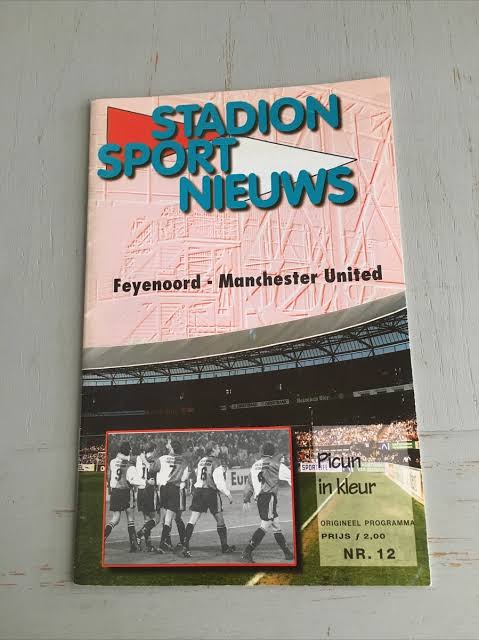
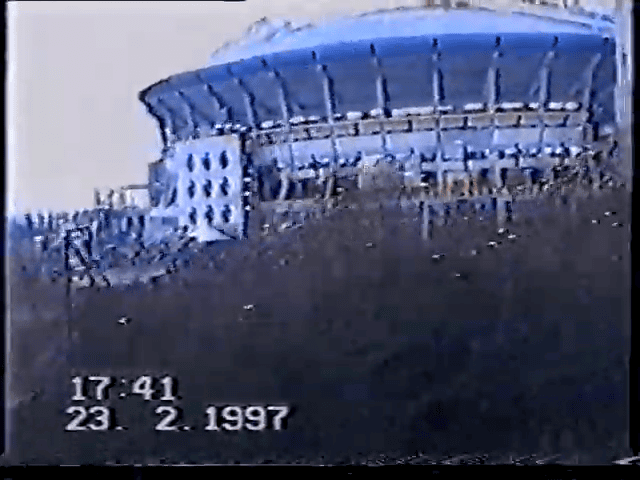
In this article we rewind to 1997 and an invasion by Manchester United’s Men In Black to Rotterdam, home of the mighty Feyenoord FC, for a Champion’s League encounter. Let’s get straight on with the stories.
Men In black story
First we have Men In Black firm member, Ryan who told us…..“I knew before we even left England that Feyenoord away was going to be different. United had been drawn against them in the Champions League, and everyone was talking about Rotterdam as though we were heading into enemy territory. This wasn’t one of those European trips where you simply jumped on a plane, found a bar and spent two days singing. Feyenoord had a serious reputation, and the United firm knew it. I travelled over with Voodoo, driving down to Dover before crossing to Holland and eventually making our way to Amsterdam. We were there the night before and the city was packed with Reds. Everywhere you looked there seemed to be another United shirt or familiar face. There was a feeling that something was brewing, although nobody knew exactly where or when it would happen. The following morning the talk was all about Rotterdam and getting there early. The plan was simple: travel together, get into the city before Feyenoord could organise themselves and make sure United weren’t going to be sitting ducks.”
“We caught the train towards Rotterdam with a huge United following, and the atmosphere was completely different from the usual European away days. The train was bouncing, songs ringing through the carriages and lads were looking forward to getting off and seeing what Feyenoord had to offer. When we eventually arrived, there was a huge police operation waiting for us. Dutch police were everywhere, and it became obvious very quickly that they knew exactly what sort of day this could become. United supporters spilled out of the station while Feyenoord fans gathered around the city. There were sudden surges, shouting and little confrontations breaking out before the police moved in. At one point, after a police charge, Voodoo and I ended up surrounded by Feyenoord supporters. We weren’t immediately recognised as United, so we kept our heads down and moved with the crowd until we could get clear. Elsewhere, though, things were getting much more serious. Stories were coming through that United lads had already been involved in trouble around the pubs and that Feyenoord were now looking for revenge.”
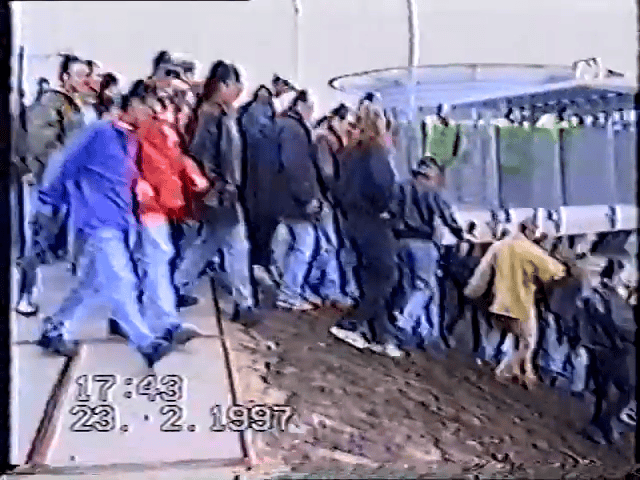
“Eventually we made our way towards De Kuip, but even getting inside wasn’t straightforward. Our tickets weren’t ideal and we found ourselves trying to work out which entrance would actually get us into the United section. The stadium itself was enormous and intimidating, packed with Feyenoord supporters. We initially ended up in an upper section surrounded mainly by home fans, while the more active Feyenoord following was concentrated below us. Down there it looked absolutely mental. The singing never stopped and there was a constant sense that something could kick off at any moment. During the match, tensions boiled over when a barrier separating sections became the focus of attention. Suddenly there was movement, shouting and supporters trying to get closer to each other. From where I was standing, you could feel the whole stadium change. United were winning comfortably, though, and that gave the Reds plenty to sing about. When United went 3–0 up, the away support was loving every second. Then came the chant aimed at Ajax. That seemed to push the Feyenoord supporters over the edge. The noise inside De Kuip became incredible as whistles and abuse rang around the stadium.”
Things get heated inside the stadium
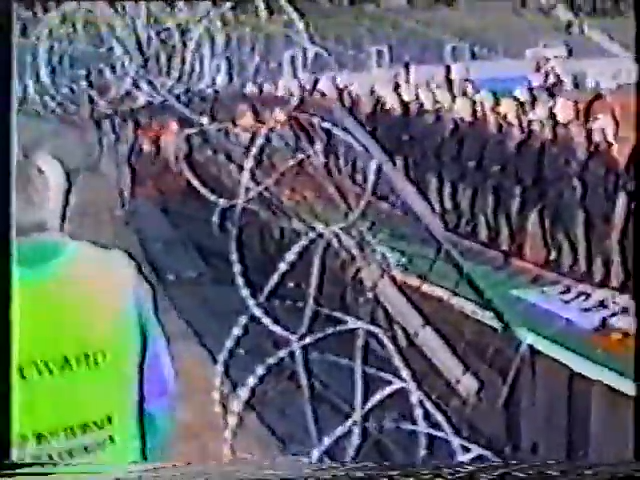
“By the second half I’d managed to get closer to the United lads, and being surrounded by a decent mob completely changed the experience. United were three goals ahead and the atmosphere in our section was brilliant. But outside the ground, the police clearly knew what was coming. When the final whistle went, the United supporters weren’t simply allowed to walk away. We were held inside while the Dutch police established a huge cordon. Eventually I found myself among a group of United lads outside the stadium perimeter, with riot police protecting us from the Feyenoord mob gathering nearby. They were dressed in full riot gear and looked enormous. Further away, hundreds of Feyenoord supporters were gathering and trying to move towards us, but the police kept them back. It was obvious that neither side wanted to simply go home. The feeling was that this wasn’t finished yet. Every few minutes there was another surge somewhere beyond the police line. The whole area was full of shouting and tension, with everyone waiting to see what would happen next.”
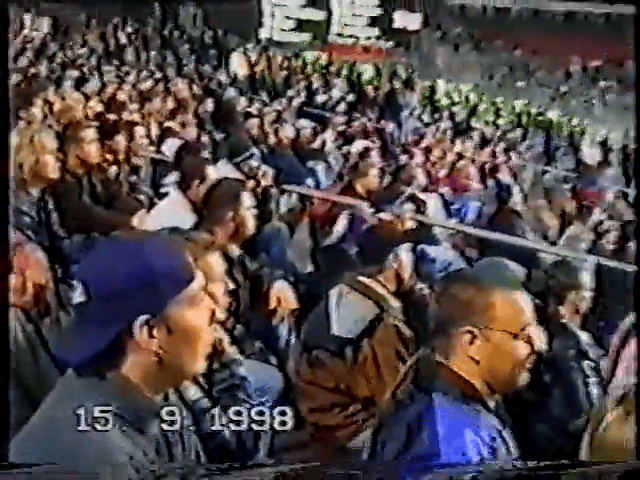
“Then came one of those surreal moments that you never expect on a football trip. While we were being held outside the stadium, I noticed some people coming out through a door nearby. At first I didn’t pay much attention, but then I realised it was Andy Cole. I’d just watched him score a hat-trick and suddenly he was standing a few yards away. I went over and shook his hand, telling him what a performance he’d just produced. Soon other United players appeared and the supporters gathered around them. Schmeichel, Neville and Sheringham all received a massive reception. For a few minutes the violence and police operation seemed miles away. It was simply United supporters celebrating one of the great European performances. Eventually we were released and made our way back towards the station. The police had managed to keep the larger Feyenoord mob away, but everyone knew what could have happened if the cordon hadn’t been there. Back in Amsterdam, the stories were already flying around about what had happened in Rotterdam. Some said United had taken over the city, others insisted Feyenoord had given as good as they got. The truth was probably somewhere between the two. What I knew was that United had won 3–1, we’d survived a seriously hostile European night and Andy Cole had produced a performance none of us would forget.”
United aftermath
“For me, though, the strange thing about the whole trip was how quickly the mood changed. One minute you were singing on a packed train with hundreds of Reds, the next you were surrounded by police with Feyenoord supporters gathering outside the cordon. It was football in the 1990s, and European away days could feel like entering another world. Looking back, there were plenty of moments when things could have gone badly wrong, and I’m glad they didn’t. But when I think of Rotterdam in 1997, I remember the noise of that train, the intimidation around De Kuip, United going 3–0 up and the sight of Andy Cole walking out after scoring three goals. Whatever anyone on the forums says about who won the fighting, nobody can take that result away from United. On the pitch, we had absolutely battered them.”
Feyenoord SFS’s perspective
Feyenoord SFC firm member, Wilem told us…”When Manchester United came to Rotterdam in 1997, we knew exactly what sort of supporters were coming with them. This wasn’t simply another Champions League match. English clubs had been visiting Feyenoord for years, and there was history behind it. Spurs had come to Rotterdam in the seventies, and English firms had learned that De Kuip wasn’t a place where you could expect an easy afternoon. The SFCF (Sports Club Feyenoord Firm) were going to make sure of that. We considered Rotterdam our territory, and when word spread that United were arriving in numbers, the mood among our lads changed. The stories coming back from the city only made things worse. United supporters were already moving around, appearing in places where Feyenoord fans drank and acting as though they owned the place. Before long, the word was spreading that there had been confrontations. We knew the United firm had a reputation, but reputation meant very little once they were standing in our city. If they wanted to come to Rotterdam and make a statement, they were going to find out that Feyenoord were prepared to answer it.”
“By the time the United supporters began arriving around the centre and heading towards De Kuip, the police were struggling to keep everything apart. There were hundreds of people moving around, with groups of United and Feyenoord supporters repeatedly coming into contact. The police would push one side back, only for another confrontation to appear somewhere else. We knew the English were travelling in numbers, but we had numbers too, and the home advantage mattered. This was our city, our pubs and our stadium. Some United supporters had apparently attacked a pub where ordinary Feyenoord supporters were drinking, and that only hardened the mood. Whether every story told afterwards was completely true didn’t really matter by then. What mattered was that everyone believed the other side had started it. By the time the supporters reached the stadium, the police had created a huge operation around De Kuip. Nobody trusted anybody. Everyone was waiting for the next confrontation.”
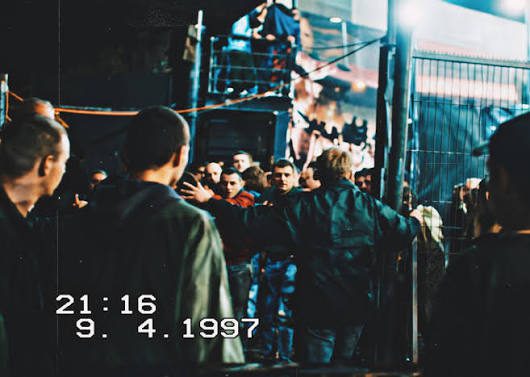
“Inside the stadium, the atmosphere was incredible. De Kuip was packed and the Feyenoord support was determined to make sure the English knew where they were. Then United started scoring. One goal became two, and eventually they were three ahead. That hurt, because on the pitch Feyenoord were being beaten badly. But the defeat didn’t make the atmosphere disappear. If anything, it made the anger stronger. Supporters behind the goal were bouncing and shouting while the United section celebrated. At one point the barrier between the two groups became the centre of attention. People were pushing towards it and the police were desperately trying to maintain control. From our side, there was a feeling that United wanted to prove something. We weren’t going to simply sit there and watch them celebrate in our stadium. The problem was that the police had created barriers and locked sections down. Neither side could simply get through without risking chaos. So the confrontation continued around the barriers, with everyone shouting and waiting for the next opening.”
Feyenoord’s firm go on the attack
“When the match ended, we knew the night wasn’t over. United had won 3–1, but their supporters were still inside the stadium and the police were keeping them there deliberately. Outside, groups of Feyenoord supporters gathered around the ground. We were angry about what had happened in the city and wanted to get close to the United lads, but the Dutch police had planned for exactly this. They formed lines in riot gear and pushed people away from the stadium perimeter. Every time it looked as though the two groups might meet, the police moved in. Some United supporters later said they had been surrounded; some of our lads said the same thing. That was the strange thing about the night: everyone had their own version. United believed they had stood their ground in Rotterdam. We believed we’d defended our city and made them work for every inch. Inside the stadium, nobody wanted to be the first through that barrier because everyone knew what could happen if the police line disappeared. So the confrontation became a test of nerve as much as anything else.”
“Years later, people would still argue about who won the fighting. United supporters would say they had battered Feyenoord around Rotterdam. Feyenoord supporters would tell a different story, saying United had attacked ordinary supporters and that our lads had given them plenty to think about inside and outside the stadium. That’s how these stories work. Every firm remembers the moments that make them look strongest. What I remember is the atmosphere: the English arriving in numbers, the city centre boiling over, the police everywhere, and De Kuip roaring even when we were three goals down. Manchester United left Rotterdam with the points, but they didn’t get a quiet European away day. They had come expecting trouble and they found it. For us, that was the important thing. Rotterdam had been tested, De Kuip had been tested, and the Feyenoord name had been defended. The scoreline said United won the football match. But on the streets and around the stadium, both sides would spend years afterwards insisting they had won something else.”
We thank Ryan and Wilem for their recollections. It’s clear that the Men In Black had a massive firm out that day. It’s less unclear who actually won the day though. We’ll give it a score draw, but what do you guys think? Where you there? What happened? Let us know in the comments.
Final Words
Thanks for reading. Please share our story, as it really helps our website to grow, to give you bigger better content. Did you read our last story? Exeter City vs Wolves 1978: The KKK Cup Controversy Until the next story, bye for now.
📺 Watch the Original Video
If you enjoyed this article, watch the full story from The Terrace Archive below.
Read More Terrace Stories
 Newcastle v Man United (1972): The Red Army’s Worst Day?
 Millwall vs West Ham 1972 | Harry Cripps’ Testimonial Told From Both Sides
 Nottingham Forest vs Celtic 1983: The City Ground Crush
 Cardiff vs Millwall 1999: Soul Crew and Bushwackers from Both Perspectives
 Liverpool vs West Ham 1973 | The Day the ICF Was Born