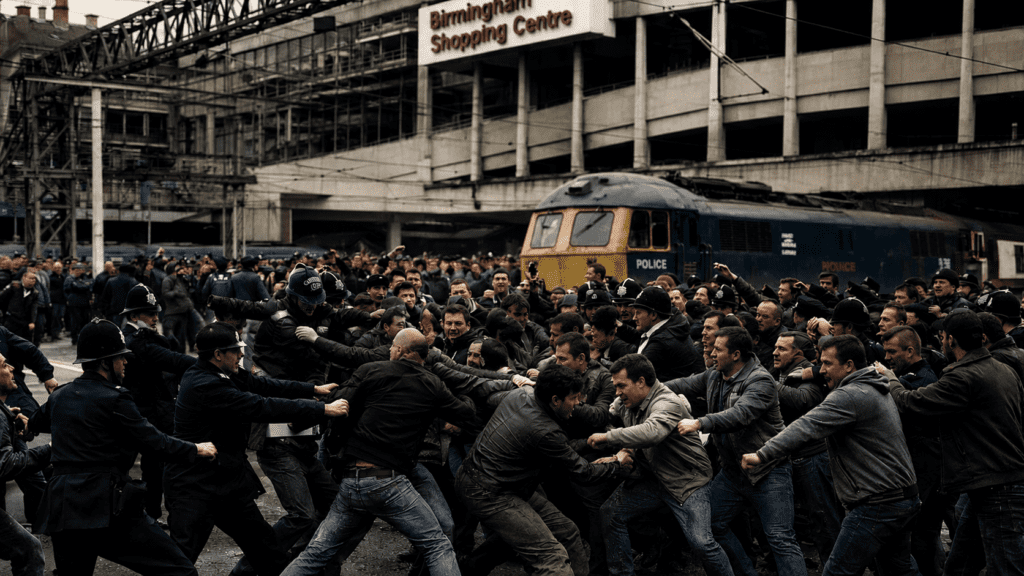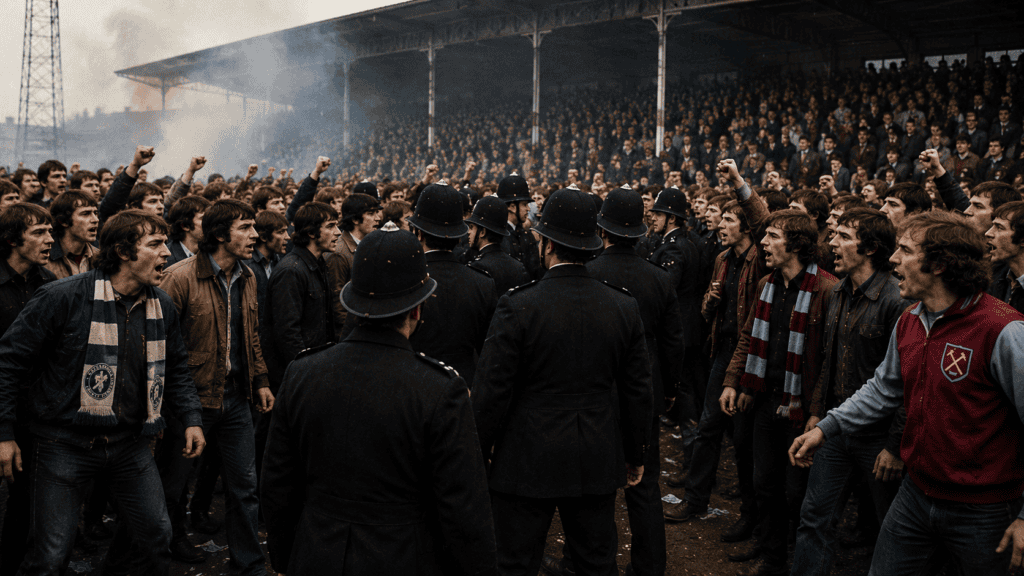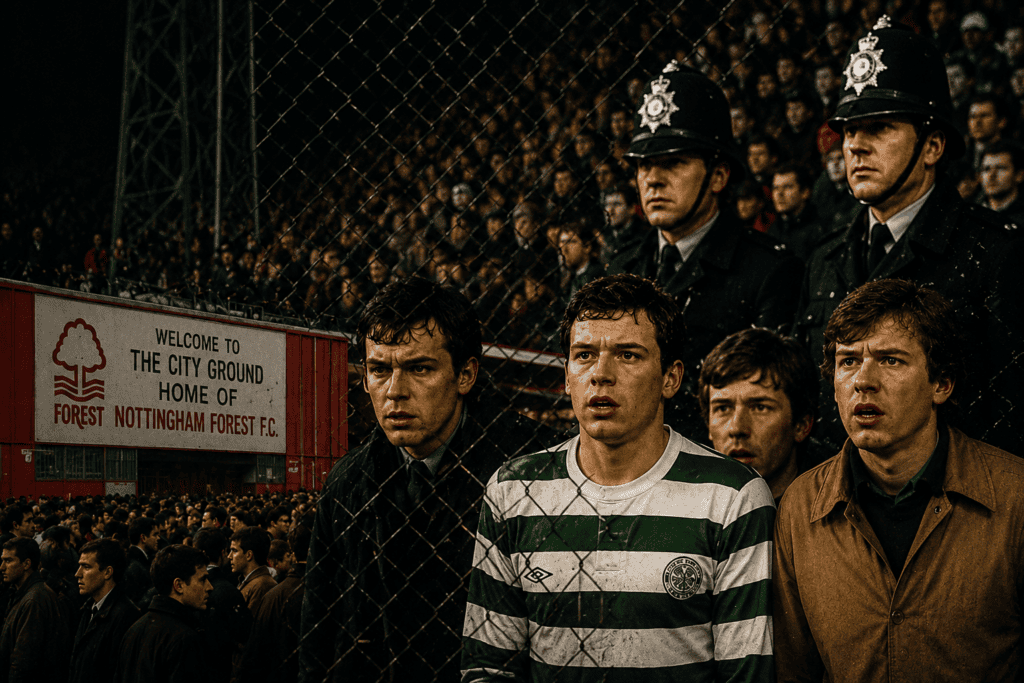
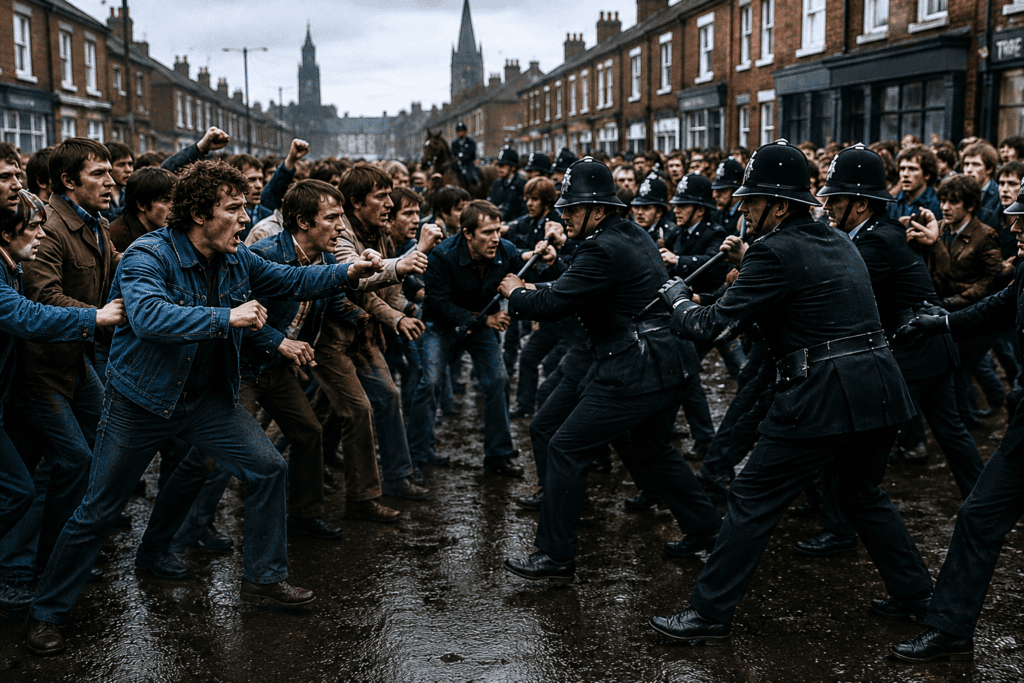
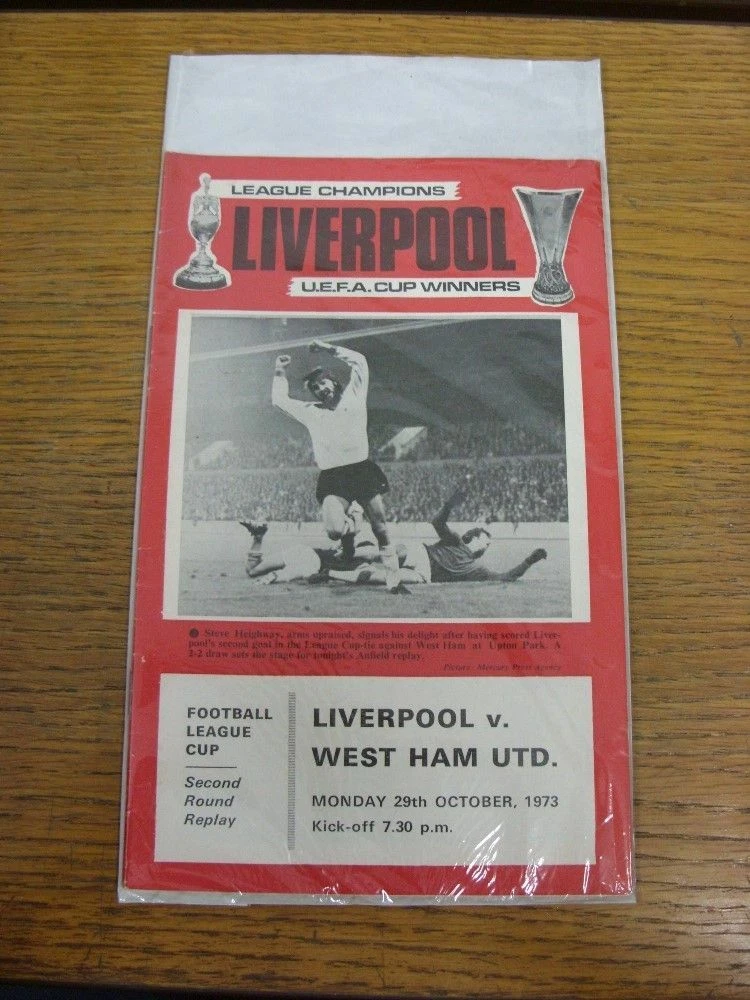
In this article we rewind to 1973 and a turning point in Football Hooligan history. West Ham are the visitors to Liverpool’s Anfield stadium, and a monster is about to be created. Let’s hear the stories.
Liverpool Urchins Story
First we have ex Liverpool Urchin member, John, who told us..”Liverpool vs West Ham 1973 remains one of those afternoons that older Liverpool supporters still talk about whenever conversations turn to the rough old days of English football. I was only a young lad then, standing on the Kop with thousands of others as Liverpool entertained West Ham in the League Cup. We’d heard the visitors had travelled in huge numbers on three football specials, far more than usual, and plenty reckoned they fancied themselves after causing problems around London. Inside Anfield there was plenty of noise, but everyone knew the real business would begin once the final whistle blew. Word travelled quickly through the terraces that the London lads were gathering in force and looking for anyone wearing red. Nobody realised that events outside the ground would become one of the most talked-about away trips of the decade.”
“When the match finished, groups of West Ham supporters spilled away from the Anfield Road End looking for opportunities. A few local lads were chased through the surrounding streets, exactly as the visitors had hoped. But Liverpool wasn’t like many southern grounds where isolated groups could be picked off. The terraced streets around Anfield were familiar territory to generations of local supporters, and news travelled quickly from one corner to another. Before long, hundreds of Liverpool lads had gathered further along Scotland Road, waiting where they knew the Londoners would eventually appear. Everton’s own fixture had been postponed that day, meaning plenty of Blues were also free to lend a hand. Rivalries were forgotten for one afternoon as both sets of Merseyside supporters stood shoulder to shoulder.”
The Trap Was Set
“The West Ham group suddenly realised they had walked into a trap. Instead of finding scattered locals, they found themselves staring at what seemed like an endless sea of Liverpool and Everton supporters stretching across the road ahead. Panic spread almost instantly. Those at the front tried to turn back while others pushed forward, leaving confusion throughout their ranks. What followed became legendary in football folklore. The visitors scattered through unfamiliar streets in every direction, desperately trying to find safety or the long route back towards Lime Street Station. For many local lads, it was proof that travelling north required far more preparation than taking on rivals in London.”
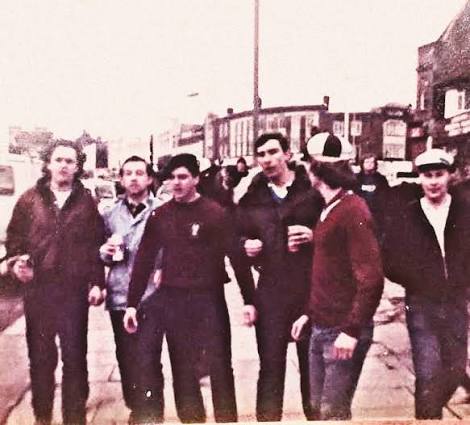
“Long before mobile phones or organised escorts, the streets became chaotic. Some West Ham supporters were separated from their mates and stripped of jackets, scarves and expensive new trainers. Others abandoned clothing simply to run faster. Stories spread for years about London lads making the long train journey home wearing borrowed clothes or whatever remained after the confusion. Like many stories from that era, every retelling added another detail, making it difficult to separate fact from exaggeration. What everyone agreed upon, however, was that West Ham had suffered one of their toughest away days in years.”
“Looking back now, most of us laugh at how different football was in the early 1970s. There were few segregation measures, little policing compared with today and supporters often mixed freely before and after matches. That day on Scotland Road became part of Merseyside folklore, remembered not because Liverpool and Everton forgot their rivalry forever, but because for one afternoon they stood together against visitors who had arrived believing they could dominate another city. Whether every story told about that afternoon is entirely accurate hardly matters anymore. The match itself has largely faded into history, but memories of the streets outside Anfield have endured for more than fifty years.”
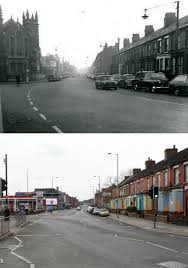
“Many former West Ham supporters later described that trip as a turning point. Some have claimed it convinced sections of the travelling support that they needed to become more organised whenever venturing outside London. Whether that was truly the moment the famous Inter City Firm began or simply one of several influences remains debated among those who were there. Either way, for those of us on Merseyside, October 1973 is remembered as the day the visitors discovered that Liverpool’s streets could be every bit as intimidating as the football played inside Anfield.”
The West Ham Story
West Ham ex Mile End Member Ronnie told us..”People ask why the Inter City Firm became so organised during the mid-1970s. Everyone has their own version, but whenever I think back to where things truly changed, my mind always goes straight to Liverpool in October 1973. We’d travelled in numbers we’d never managed before, arriving on three football specials instead of the usual one. There was a real confidence about us. We’d already earned reputations around London, taking on Chelsea, Arsenal and plenty of others. Most of us genuinely believed we were ready for anywhere in the country. Looking back now, we were confident, but we were also naïve. We knew London football. We didn’t yet understand northern football culture.”
“Inside Anfield we held our own in the away end despite plenty of pressure from the locals. Afterwards a large group of us followed several Liverpool supporters through the surrounding streets, believing we had them on the run. It felt exactly like other away trips where the home support scattered once enough numbers appeared. Then everything changed in an instant. We reached Scotland Road and suddenly realised the lads we’d been chasing were only leading us somewhere. Ahead stood what looked like thousands of Liverpool supporters waiting calmly across the street. Beside them were Everton lads too, their own match having been cancelled. Two fierce rivals had united because outsiders had arrived in their city.”
The Carnage Begins
“The confidence disappeared immediately. Nobody shouted instructions because there weren’t any. Everyone simply tried to survive. Groups broke apart, mates vanished into side streets and nobody knew which direction led back towards the station. You’d see someone beside you one second and they’d be gone the next. I lost my jacket somewhere during the confusion. Another lad lost his trainers and jeans after being cornered in one of the back streets. We eventually found him hours later wearing little more than his underpants and whatever somebody could spare. That image stayed with me longer than anything else from that afternoon. We’d travelled believing we were untouchable. Instead we were heading home battered, exhausted and wondering what had just happened.”
“The train journey back to London was unlike anything I’d experienced before. Usually we’d spend hours reliving the day, laughing and exaggerating stories. This time hardly anybody spoke. One bloke sat holding his side after suffering a serious injury. Others stared out of the window, embarrassed by what had happened. Every station we passed seemed to make the silence even heavier. Nobody wanted to admit it openly, but we’d been taught a lesson. We had relied too much on reputation and numbers without thinking about unfamiliar territory, local knowledge or proper organisation. Football away days outside London were a completely different challenge.”
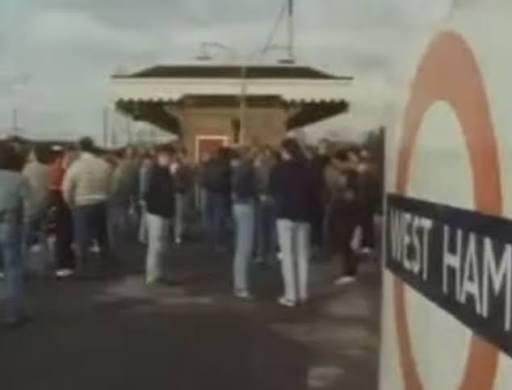
“Over the following years those conversations continued. Different groups of West Ham supporters contributed ideas about how travelling should work, how intelligence should be gathered and how everyone should look after one another away from home. Among many who were there, the memories of Scotland Road remained a constant reminder of what could happen if you underestimated another city’s support. Whether historians point to one afternoon or several influences, many former West Ham lads have long regarded that Liverpool trip as one of the defining moments that encouraged a more organised approach.”
“Half a century later, I don’t remember the score at Anfield without checking the record books. What I remember are the streets afterwards, the long journey home and the feeling that football had suddenly become far bigger than London rivalries. We arrived believing we were the hunters and left knowing we’d been outmanoeuvred. For me, that afternoon wasn’t simply another away trip. It was the day we realised that if we wanted to compete across the country, everything had to change. And from that point on, many of us believed it would.”
Aftermath
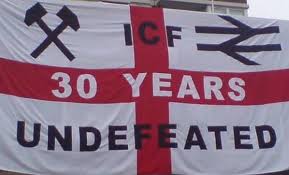
We thank John and Ronnie for their recollections. It’s clear that the different factions of West Ham had a torrid time at the hands of a United Scouse firm. The introduction of the ICF came a few years later we understand, but it was always this match that people talked about when they gave examples of not sticking together. The ICF would go on to be one of the most controversial firms of all time.
Thanks for visiting. Now, please share, & comment, as it really helps our website grow to give you bigger better content. Did you read our previous post West Brom Sector 5 vs Wolves Subway Army | 1983 Clash
Until the next article, bye for now.
📺 Watch the Original Video
If you enjoyed this article, watch the full story from The Terrace Archive below.
Read More Terrace Stories
 Birmingham Zulus vs West Ham ICF (1981): What Really Happened?
 Millwall vs West Ham 1972 | Harry Cripps’ Testimonial Told From Both Sides
 West Brom Sector 5 vs Wolves Subway Army | 1983 Clash
 Cardiff vs Millwall 1999: Soul Crew and Bushwackers from Both Perspectives
 Sheffield Derby at Wembley 1993: A Day of Tragedy