
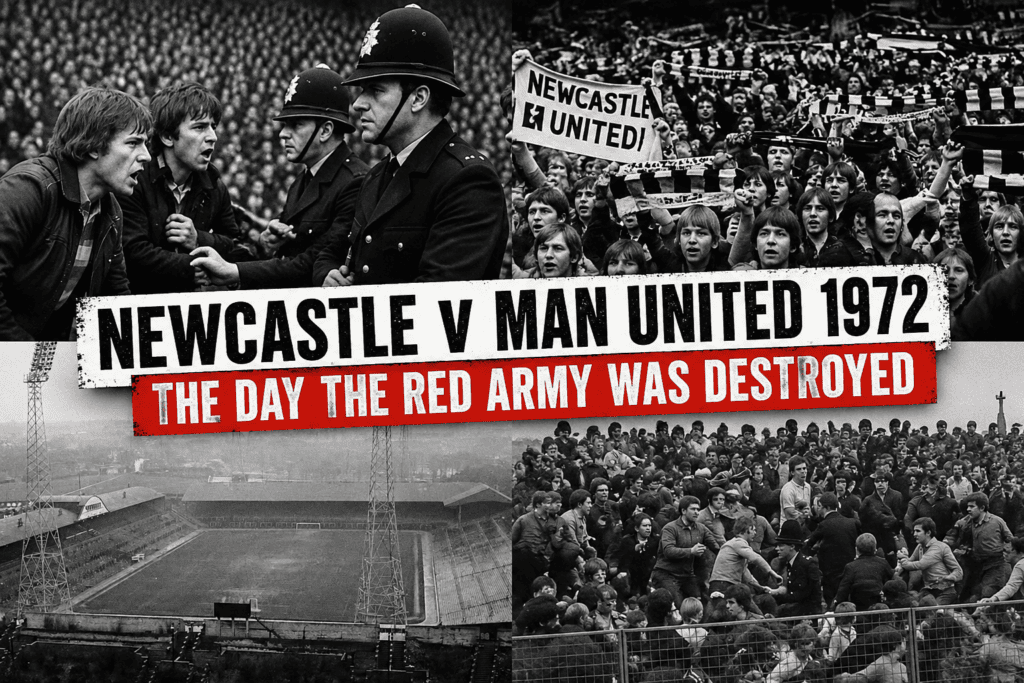
Man United’s Red Army were probably the biggest hooligan army of these early football hooligan years. Most away matches were a total invasion, but a few away games were full of dangers, even to the massed United ranks.
the red army mobilise
Let’s hear the stories….Man United Red Army member, Mark, told us..“Ah yes, Newcastle v Man United 1972. I’d been to some grim places with United, but nothing prepared me for Newcastle in ’72. Even on the train up I felt it—something in the air, like a storm rolling towards you. I was only nineteen then, still wet behind the ears compared to some of the older lads, but I’d already seen enough to know when a day was going to go wrong. And everything about that morning whispered trouble. Word filtered through early that the Geordies were out in numbers, real numbers, and were already sniffing around the pubs near the station. We’d come up expecting a battle, but not a massacre. The first hint came when someone said Jeff Lewis’s lot had run into an ambush on the walk from the station. Jeff, who was built like a brick wall and feared by most firms going, was supposed to be unbreakable. But the whispers said he’d been sparked with something metal—an iron bar, someone said—and carted off by ambulance. That rattled everyone. If Jeff was down, what chance did the rest of us have?”
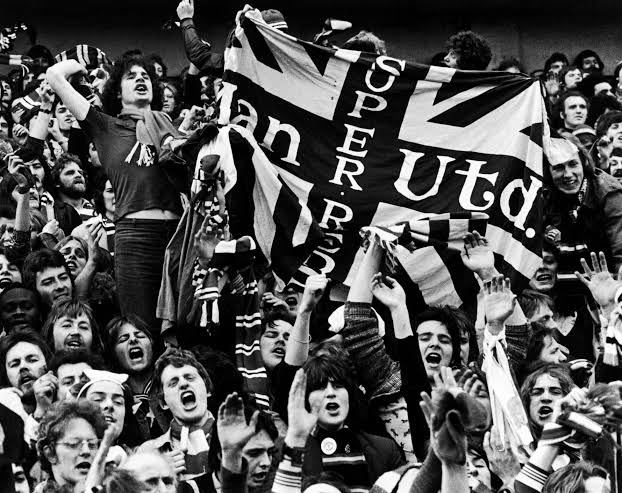
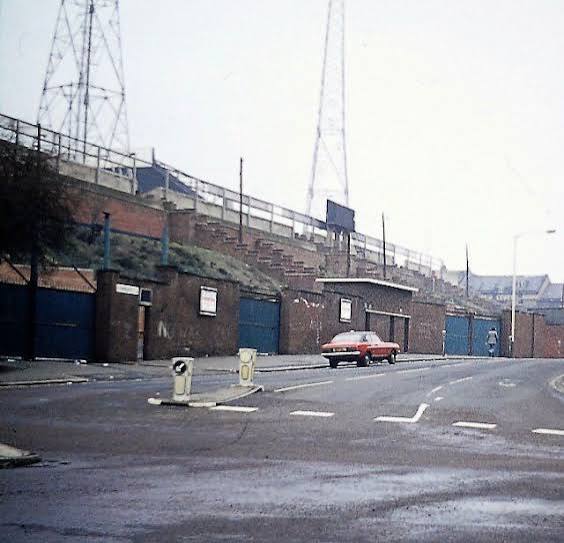
“We split up, as you did at grounds like this, hoping to pick our way through without drawing attention. But Newcastle had come out early, proper organised, and they’d taken root around the stadium hours before kick-off. As I made my way up the hill towards St James’ Park, you could feel their eyes on you. Groups of black-and-white shirts dotted the streets, all staring, waiting to see if you’d flinch. Inside, the place felt worse. Our “end”—behind the goal, open terracing—was already heaving with Geordies. They’d flooded in early, taking the high ground at the back like soldiers setting up before a charge. You could tell straight away we were outnumbered. Not by a few dozen. By hundreds. I slipped in quiet, trying to blend into the edges near the floodlight pylon. I was learning back then—watch first, move later. And it saved me. Because what happened next was carnage.”
Trouble Inside The Ground
“It started with a rumble from the top. A whole line of them, shoulder-to-shoulder, pouring down the terrace like a black-and-white avalanche. United lads who’d grouped behind the goal barely stood a chance. I watched one of ours—big fella from Salford—take a punch from the side and vanish under a sea of boots. Another tried swinging but was dragged down instantly, swallowed by the surge. The sound was horrible—shouts, bottles clattering, the smack of fists on bone. You didn’t know where to look, only that you needed to stay out of sight. Then, unbelievably, they came over the pitch. I’ll never forget that moment—thousands of Geordies, or so it looked from where I stood, pouring across the grass like it was their God-given right. It was the first time I ever saw the home support invade the pitch at an away game. They weren’t mucking about either. They sprinted straight at what little remained of our end, vaulting the advertising boards, piling into the stragglers who hadn’t already scattered.”
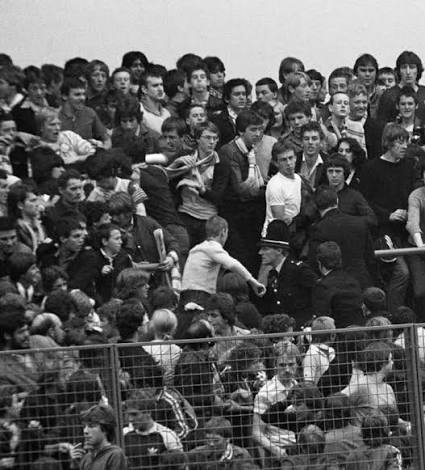
“For all our reputation, for all the talk of the Red Army, we had nothing that day. No foothold, no numbers, no hope. It was like trying to hold back the tide with your bare hands. Some of our latecomers kept themselves hidden among the home fans, heads down, praying they wouldn’t be recognised. Others were huddled behind a line of police who looked like they’d rather be anywhere else. A few tried to make a stand but got battered senseless for the effort. At half-time, unbelievably, Jeff Lewis turned up. His head wrapped in bandages like something out of a horror film, still determined to make the match. He must’ve wondered where everyone had disappeared to. He’d missed the worst of it, but he saw enough in our faces to know we were beaten long before the final whistle. After the match the streets were a death trap.”
After The Match
“Every corner you turned, there were pockets of Geordies on the hunt. Packs of them sprinting around, checking alleys, shouting for “any Manc bastards.” I stuck to the backstreets, but the feeling of being hunted got inside your bones. I took one turn too sharp and ended up in a deserted car park. I was that spooked I dived under a parked motor and lay there, breathing so hard I thought they’d hear it. Ten minutes felt like an hour. Boots ran past once—maybe twice—and I didn’t dare look. When I finally crawled out, I legged it for the station. I found about 180 of our lot corralled on a platform out of sight from the main entrance. Bandaged heads, split lips, shirts ripped to bits. Some lads were shaking, not from fear but from the shock of how bad it had gone. It was the most beaten I’d ever seen United away support. No pride left, just survival. Across the tracks, this mouthy kid in a Rangers top started giving it the big one, shouting down at us like we hadn’t already had the worst afternoon of our lives. One of our lads slipped off quietly, disappeared beneath the platform, then popped up behind him, smashing him clean across the jaw. The whole platform erupted. For a moment—just a moment—it felt like we’d got one back. But it didn’t change the truth. Newcastle ’72 was the day the Red Army got taught a lesson. A painful, brutal one. And I’ll never forget it.”
The Newcastle Story
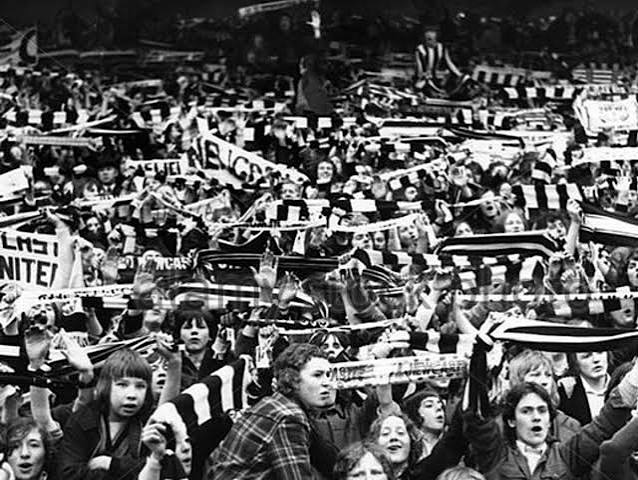
Newcastle fan Billy told us….”I was seventeen in October ’72, still more boy than man, but that afternoon against Manchester United was the day I felt myself truly come of age on the Gallowgate. For weeks there’d been talk that United were coming up mob-handed, that their Red Army was the business, feared everywhere. Older lads muttered that they’d try to take our end like they did across the country. No one in Newcastle was having that. By ten in the morning we were already gathering in town. The air was cold, crisp, and full of that nervous energy you only get on big match-days. Everywhere you looked: black-and-white scarves, long hair, big collars, donkey jackets. Some of the hardcases from Byker and Benwell were out early, standing in tight little packs with that stillness that meant trouble was coming. Word spread fast: United were on their way from the station and already trying to form up. Jeff Lewis’s name came up — some said he was a monster, could fight anyone. That only made our lot more determined. If United fancied walking into Newcastle like they owned the place, they were going to get a very rude welcome.”
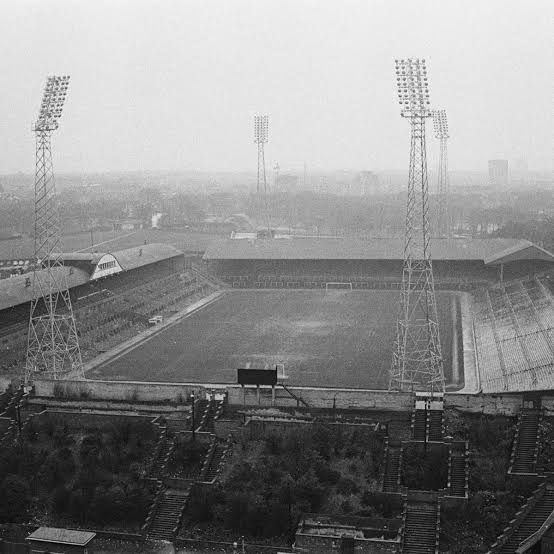
“We positioned ourselves along the approach roads up to St James’, not in big mobs but in pockets, waiting, watching. Some of the older lads had a plan — let the Reds walk into the trap. I kept my mouth shut and followed. It felt like the whole city was holding its breath. When the first batch of United showed up, it went off instantly. No shouting, no fronting, just an eruption. I saw one of ours swing something — a bar or length of metal — and catch that big United lad everyone talked about. He went down hard. The Reds tried to push forward, but they were swallowed by numbers. It wasn’t a battle; it was a hammering. United scattered, some crawling, some running, none wanting to be there anymore. By the time the police waded in, the job was done. We let them shepherd the Reds away because the real fun was still to come. Inside the ground, we had already taken the high ground behind the goal. Some of the older boys knew exactly what they were doing — get in early, fill the top of the terrace, control the slope. Looking down from those steps, you could see United trickling in, heads turning like they knew something was off. A few gathered, but not many. They must’ve sensed the danger because hardly any stood together.”
The Fighting Starts
“When the shout went up, it rolled through us like electricity. A single roar from the back and suddenly the whole terrace shifted. We moved as one, surging down the steps, a black-and-white wave. The Reds barely resisted. They were trapped at the bottom, backs to the fence, nowhere to run. I saw one of them try to swing but he disappeared under boots and fists. Another lad, a young one, froze completely and got flattened before the police dragged him out by his collar. From my angle, it looked like a battlefield — bodies falling, scarves ripped, shirts torn open. But the most incredible moment came seconds later. The lads on the side decided to go across the pitch. I still get goosebumps thinking about it: hundreds of Geordies climbing over the railings, sprinting across the grass towards the few Reds who’d managed to huddle together. The noise was unreal. Even the players looked shaken. The police tried forming a line but were shoved aside like cardboard cut-outs. I didn’t get on the pitch myself — I was too far from the front — but I saw the charge from above. It was like watching a tide swallow a sandcastle. United had nothing. No foothold. No numbers. No control. It felt like we were reclaiming our house from intruders.”
“After the match, the city turned into a maze of hunts. Little mobs darting down side streets, lifting their heads whenever a stranger walked past. Everyone wanted a piece of United. I saw a pair of Reds sprinting near Gallowgate, chased by ten lads who were laughing as they ran. Another was cornered near a bus stop and got his shirt torn off before the police intervened. But the moment that topped the day came later at the station. We climbed the footbridge hoping to see a few stragglers. Across the tracks, United were gathered on a hidden platform — battered, bloodied, slumped. They looked like they’d been through a war. One lad wearing a Rangers shirt started shouting at them, winding them up, asking what happened to their big bad reputation. Then, suddenly, one Red disappeared underneath somewhere and reappeared behind the Rangers lad, absolutely flattening him with a single punch. The United platform erupted in cheers. I couldn’t help laughing. Even battered as they were, they still had some pride left. But make no mistake: October 1972 was Newcastle’s day. The day we showed the Red Army there were some places in England they couldn’t walk through.”
The Aftermath
We thank Mark and Billy for their recollections. It’s clear the Red Army had a bit of a off day on Tyneside that October day back in 1972. But Newcastle was a very tough place to go for most firms, especially in the early seventies.
Thanks for visiting. Please comment and share, as it really helps our website grow and give you bigger better content. Did you read our previous article? When Rangers Took Over Villa Park (1976)Until the next article, bye for now.
📺 Watch the Original Video
If you enjoyed this article, watch the full story from The Terrace Archive below.