Relive the infamous 1995 Lansdowne Road Riot as England v Ireland was abandoned after crowd violence. Discover both sides of one of football’s darkest nights. Let’s get on with the stories.
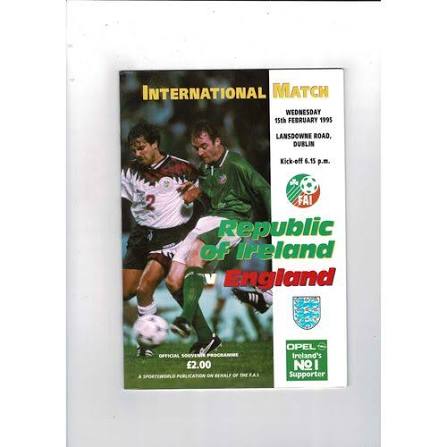
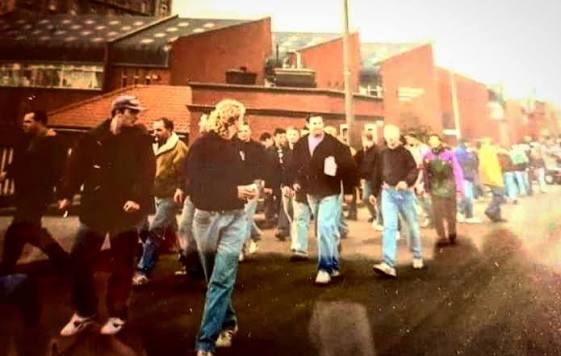
First we have England fan Tony, who told us..”I still remember stepping off the ferry at Dublin that September morning. I’d followed England all over Europe by then, and away trips always carried a certain edge, but this felt different before we’d even reached the city. The ceasefires in Northern Ireland had given people hope that the violence of The Troubles might finally be easing, yet politics seemed to be following us everywhere. In the pubs around the docks, conversations quickly drifted away from football and onto the IRA, the peace talks and whether the British government had gone too far in negotiating. Some of the lads I travelled with were only interested in the match, but others were angry long before a ball had been kicked. Mixed among the usual England supporters were men wearing familiar bomber jackets and Doc Martens, quietly handing out leaflets and talking about patriotism, betrayal and taking a stand. They weren’t there simply to watch football. It was obvious they had come with a different purpose altogether, and as we made our way through Dublin’s streets, you could almost feel the tension building with every pub and every police cordon we passed.”
Football Becomes Political
“By the time we reached Lansdowne Road, there were thousands of England fans filing through the turnstiles. Most wanted nothing more than to see us beat Ireland, but the atmosphere in our end had become increasingly hostile. Political chants echoed around the stand long before kick-off, mixing with the usual football songs until it became difficult to tell where one ended and the other began. A group several rows behind me led repeated chants against the IRA, while others responded with Union Jacks draped over the railings. There were Irish supporters close enough to exchange abuse, and every insult seemed louder than the last. The Gardaí watched nervously from below, but there was little they could do without making things worse. I remember looking around and thinking this no longer felt like an international football match. It felt like decades of bitterness had been squeezed into one stand. Whatever hopes people had of football bringing the two countries together that afternoon were disappearing with every passing minute.”
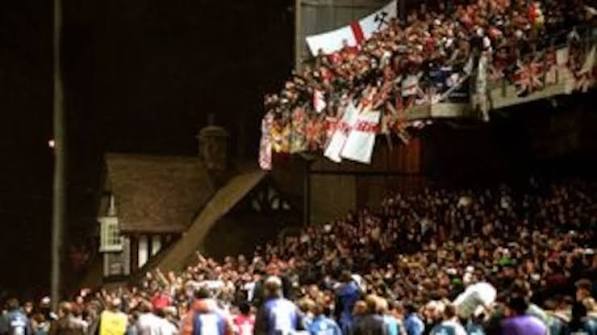
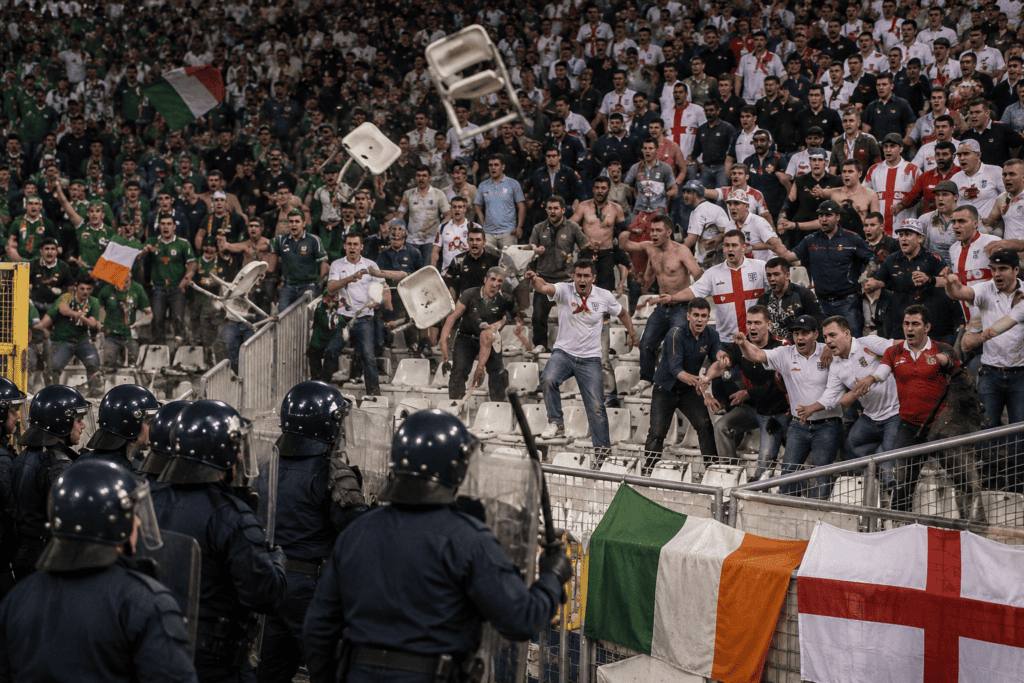
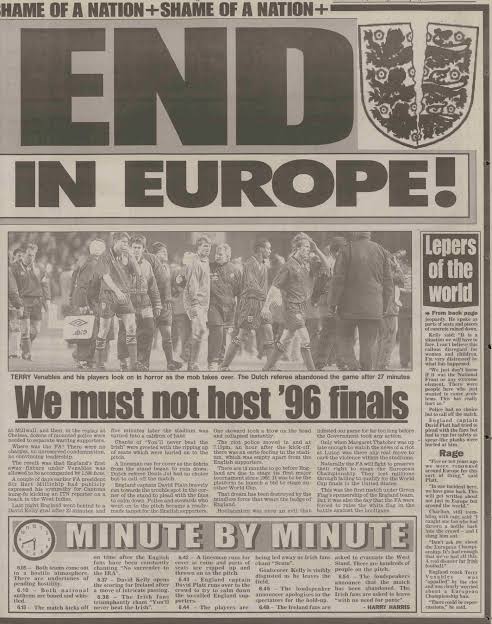
“The match itself almost became an afterthought. When Ireland took the lead through David Kelly, everything exploded. Seats were ripped from their mountings and hurled towards the lower tiers. Coins, bottles and anything else within reach followed. People surged forward as others tried desperately to move back, creating panic as much as violence. I found myself pressed against a barrier with no idea who was pushing or why. Riot police poured onto the pitch while players stood frozen, staring into the chaos unfolding behind one of the goals. From where I stood, it was impossible to know who had started throwing the first seat, but it was obvious that a determined minority had succeeded in taking control of the section. Around me were plenty of England supporters shouting for everyone to calm down, yet their voices disappeared beneath the roar of hundreds determined to make headlines rather than watch football. When the announcement came that the match had been abandoned after just twenty-seven minutes, there were cheers from some parts of the stand and stunned silence from others. I’d travelled across the Irish Sea to watch England play. Instead, I’d witnessed one of the darkest days English football supporters had produced since the dark years of the 1980s.”
Outside The Stadium
“Leaving the stadium, the reality of what had happened slowly began to sink in. We were escorted through lines of Gardaí and straight towards the ferry, with little opportunity to stop anywhere in the city. There were still pockets of trouble along the route, and those looking for confrontation seemed determined to find it until the very end. On the journey home, nobody talked much about the football because there hadn’t really been any to discuss. The newspapers the following morning condemned England supporters as a whole, but that never felt like the complete story to me. The vast majority of us had travelled to support our country, not to wreck an international fixture. A smaller group, including members of organised far-right movements, had deliberately used the occasion to promote their own political agenda and provoke disorder, exploiting existing tensions surrounding the Anglo-Irish peace process rather than creating them. Their actions overshadowed thousands of ordinary supporters and left a stain on England’s travelling support that lasted for years. Looking back now, I don’t remember the scoreline, the team selection or even many passages of play. What stays with me is the feeling that football had become little more than a stage for politics, and once that happened, the match itself never really stood a chance.”
Ireland supporter Dermot told us…”The build-up to England’s visit felt unlike any other international I’d ever experienced. Dublin was buzzing from the moment supporters began arriving, and despite the history between our two countries, most of us genuinely believed football could provide ninety minutes where politics took a back seat. The peace process was still in its early stages, and while nobody imagined decades of violence would simply disappear overnight, there was cautious optimism that relations between Britain and Ireland were improving. Jack Charlton had transformed our national team into something we were immensely proud of, and there was excitement about seeing Ireland take on our nearest neighbours in a packed Lansdowne Road. We’d heard stories that some English supporters with links to far-right organisations intended to travel, but rumours always surrounded England away games, so most of us dismissed them. As I walked towards the stadium with my mates, wrapped in green scarves and talking about the team selection, football was the only thing on my mind. I couldn’t have imagined that within an hour the match would be abandoned and remembered for everything except the game itself.”
A Political Battlefield
“Once inside the ground, though, the atmosphere quickly changed. The noise coming from the England section wasn’t the usual football banter you’d expect between rival supporters. Alongside the songs were political chants directed at Ireland and the IRA, growing louder as kick-off approached. Most Irish fans ignored them, answering with songs of our own, but you could sense the hostility building. There had always been political undertones whenever England played Ireland because of the history between the two nations and the ongoing conflict in Northern Ireland, yet this felt more organised than spontaneous. It later emerged that members of extremist groups, including Combat 18 and the British National Party, had deliberately travelled to the match hoping to cause disorder and undermine the improving relations between Britain and Ireland. Around us, families and older supporters looked increasingly uneasy, while the Gardaí watched the England section with growing concern. We had come expecting a fierce football rivalry, but what we were witnessing felt like something entirely different, as if the match had become a stage for political confrontation rather than sport.”
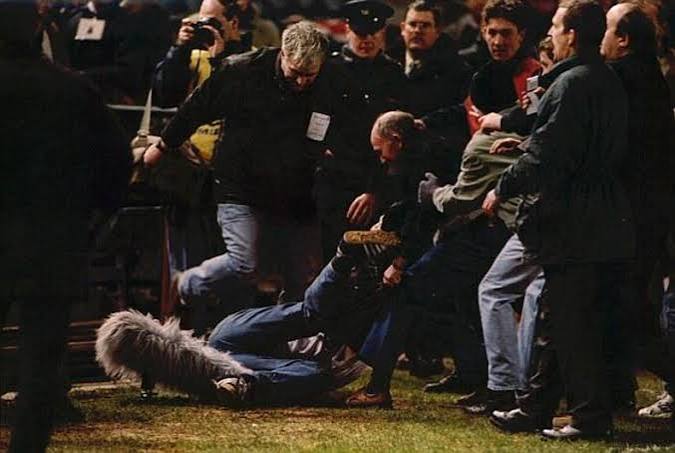
“Ironically, the football itself began perfectly. When David Kelly put Ireland ahead, Lansdowne Road erupted. Green scarves flew into the air, strangers hugged each other and, for a few glorious seconds, it felt as though the afternoon might still be remembered for football after all. Then everything changed. Seats started flying from the England end, crashing into the lower sections of the stand. Bottles, coins and broken plastic rained down as terrified supporters scrambled for cover. Parents dragged children towards the exits while others tried desperately to shield elderly relatives from the debris. I remember looking across and seeing riot police sprint onto the pitch as players stopped in confusion, unable to continue. The celebrations over Kelly’s goal disappeared instantly, replaced by fear and disbelief. We couldn’t understand why anyone would travel hundreds of miles to watch their national team only to destroy the occasion themselves. When the referee led the players from the pitch and the announcement confirmed the match had been abandoned after just twenty-seven minutes, the stadium fell into an uneasy silence. Football had been completely overwhelmed by violence and politics.”
Aftermath
“Walking away from Lansdowne Road that evening, there was a strange mixture of anger and sadness. Dublin had welcomed thousands of visitors, and the overwhelming majority of supporters—Irish and English alike—had simply wanted to enjoy an international match. Instead, a determined minority hijacked the occasion for political reasons, ensuring that one of the biggest fixtures of the year would be remembered as one of football’s darkest days. In the weeks that followed, many Irish people praised the Gardaí for eventually restoring order, while politicians and football authorities on both sides condemned the violence. Looking back now, what disappoints me most is that the riot overshadowed the progress that had been made between our two countries during such a significant period in history. Jack Charlton’s Ireland deserved to be remembered for their football, and David Kelly’s goal should have been the headline. Instead, the images shown around the world were of flying seats, riot police and frightened supporters. For those of us who were there, the biggest tragedy wasn’t simply that a match was abandoned—it was that football, which had the chance to bring people together, became another casualty of a conflict that had already taken far too much from both nations.”
We thank Tony and Dermot for their recollections. It’s quite clear that a political issue was the reason for this riot, and I don’t want to dwell on that any further. Thanks for visiting, please comment and share the article with your friends as it really helps our website. Did you see our previous article.
Nottingham Forest vs Celtic 1983: The City Ground Crush
Thank you and bye until the next article on TheTerraceArchive.com
📺 Watch the Original Video
If you enjoyed this article, watch the full story from The Terrace Archive below.