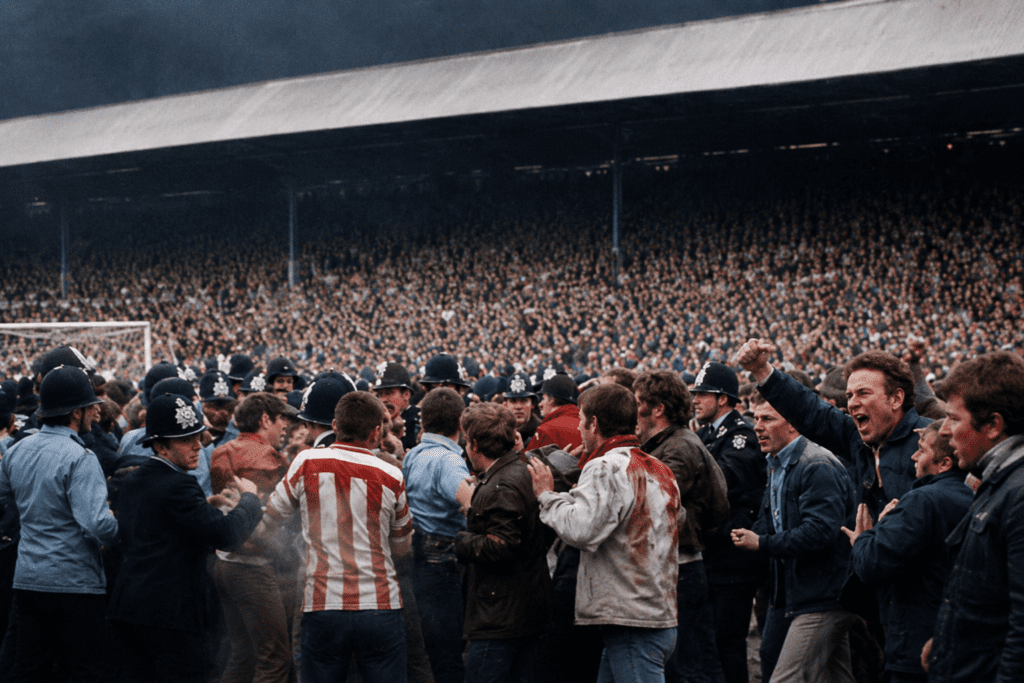
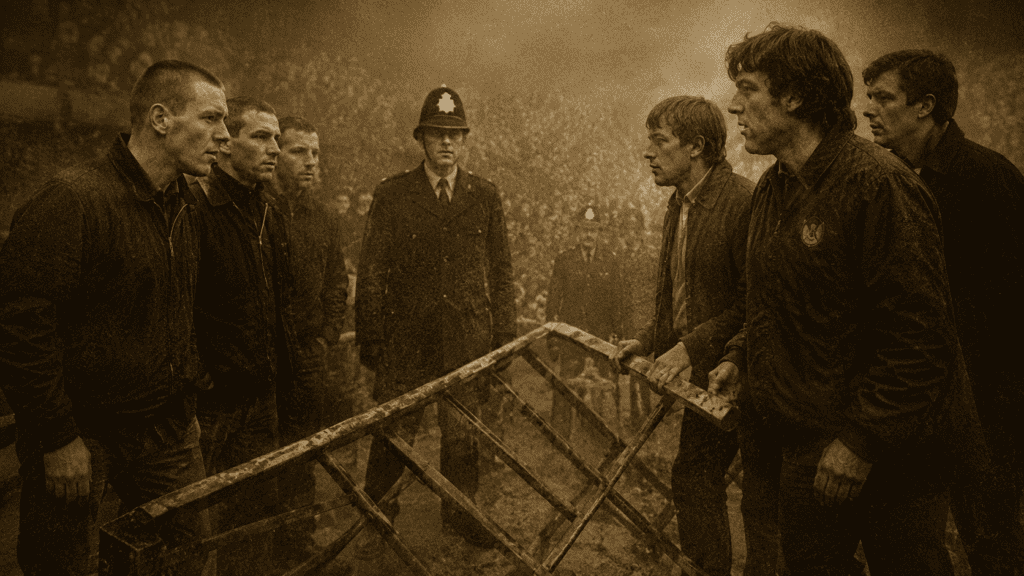
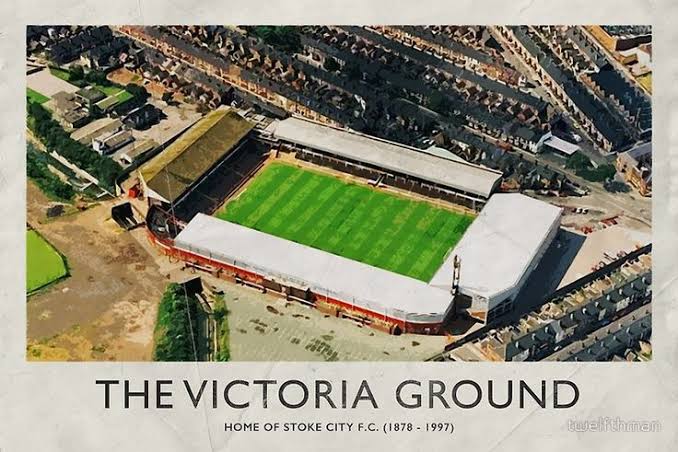
It was a cold Saturday in January 1970 when Leeds United rolled into Stoke-on-Trent… hundreds of skinheads, sharp-dressed and hungry for reputation. Although the Leeds Service Crew and Stoke’s Naughty Forty had not yet adopted those names, many of the young men involved would later become key members of those notorious firms. Their target — the Boothen End, the fortress of Stoke City. What followed wasn’t just another terrace scrap — it was a battle that nearly cost lives. The crush. The chaos. The fear. This is the story told from both sides — Leeds and Stoke — of the day the Boothen End fell… and the barriers came down. Let’s hear the stories.
The Build Up
First we have Leeds Ex-Service Crew member Steve, who told us…“Stoke City vs Leeds United 1970, We’d been talking about it all week. Stoke away. The Boothen End. Word had gone round in the boozers of Beeston and Holbeck that we were going to take it. Not just stand in the corner like we had before — take it proper. Leeds were top dogs then, and the away lads were travelling everywhere, proud, sharp, and up for anything. The morning of the game was freezing, that sort of biting January cold that cut through your sheepskin. I was seventeen, fresh head shaved, Ben Sherman under my Crombie, and a red and white scarf nicked off a Sunderland lad a few weeks earlier wrapped tight round my wrist. There were maybe three or four hundred of us on the train from Leeds — a mixture of faces from the pubs, a few older lads, and a pack of younger skins like me. Everyone was buzzing. The talk was of getting in early, before the Boothen filled, and planting the Leeds flag right behind the goal.”
Leeds Arrive In Stoke
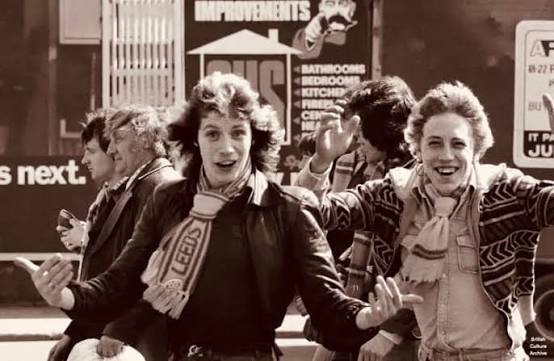
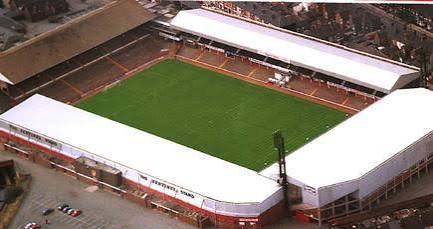
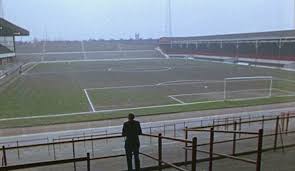
“We rolled into Stoke mid-morning and straight away it felt hostile. Little groups of locals hanging about the station, giving us the eye. We’d barely made it down to the Wharf Tavern before the first bottles went flying. A few of ours lobbed bricks in return — quick, sharp scuffles, nothing long-lasting, but enough to set the tone. The coppers turned up waving their batons about, shouting for us to “clear off to the ground”. We just laughed and sang “We are Leeds, we are Leeds” all the way up the road. By the time we got to the Victoria Ground, it was heaving. We pushed through the turnstiles early and went straight for the Boothen. The locals hadn’t filled it yet — that was the plan. Behind the goal, tight against the left-hand side by the Butler Street stand, we claimed our patch. Scarves up, voices loud, boots stamping on the old concrete. The atmosphere was electric. But you could feel it building even before kick-off. Stoke faces were appearing all around, pressing closer, their scarves red and white, mouths snarling. The police — young and nervous — tried to hold a line between us and them, but they looked out of their depth. The home fans started spitting and goading, calling us northern scum. Then someone from our lot lobbed a bottle. It smashed near the wall. That was it.”
The Barrier Collapses
“They surged. Hundreds of them pushing forward. The noise was unreal — like a wave crashing. We stood our ground, fists flying, lads swinging whatever they had, the whole terrace swaying like a ship in a storm. I remember a cry of “All together! All together!” going up from both sides and then the whole mass just moved. It was chaos. The pushing from behind was relentless — we were packed so tight I could barely move my arms. My ribs were crushing against the barrier, my feet half off the ground. I tried to shout but nothing came out. Then there was this terrible creaking sound — metal bending — and suddenly the barrier went. A rush of bodies went flying forward, down onto the walkway below. I went with them, head over heels, landed on someone’s back, others piling on top. I couldn’t breathe. The weight on me was unbearable — like the air had been squeezed out of my lungs. I remember seeing a lad’s face next to mine, eyes wide, mouth open, gasping. Then, somehow, a copper grabbed me by the arm. He must’ve been on the track. He dragged me out, my legs barely working, and dumped me near the wall. I lay there wheezing, ribs screaming, watching more blokes being pulled out, some unconscious, others bleeding. A few were crying — proper tears of panic. For a few minutes it was pure hell. I genuinely thought people were going to die.”
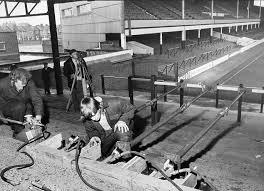
“When I finally stood up, the barrier was gone, twisted metal and splintered wood scattered across the terrace. The match was still going on, unbelievably. I could see stretchers being carried away, lads limping, police everywhere. Later I heard some of ours ended up in North Staffs hospital, faces black and blue but still grinning for the cameras. Mad times. After the final whistle — Dennis Smith nicked a late equaliser for them — it kicked off again outside. We were seething, half from the draw, half from what had happened. There were Stoke mobs waiting down every side street. We stuck together, maybe a hundred of us, marching back toward the station. Bricks started flying. One smashed against the bus window next to me, showering glass everywhere. We legged it through the smoke, ducking down an alley, coppers chasing and swinging truncheons. Somehow I made it to the train, shirt ripped, boots covered in blood and mud. As we pulled out of Stoke, I looked around the carriage — bruised faces, cut knuckles, the odd nervous laugh. Someone started the chant: “Ooh watch the barriers!” and we all joined in, half in jest, half in disbelief.”
“That day stuck with me forever. I’ve seen some rough places since, but nothing like that crush. I came within seconds of dying on that terrace. If that copper hadn’t grabbed me, I’d have been another name on the casualty list. Football changed after that — slowly, bit by bit. But back then it was just another Saturday, another battle, another scar. Leeds on tour. The Boothen tried to break us — and nearly did.”
Stoke Have Their Say
Stoke Naughty Forty ex-member Carl told us..”I remember it like it was yesterday. You could feel it in the air that morning — tension. Word had spread all week that Leeds were coming down mob-handed, hundreds of them, intent on taking the Boothen End. For us locals, that was like a red rag to a bull. The Boothen was our patch, our pride. No one came down from Yorkshire to plant their flag behind our goal. Not without a fight. Me and the lads — Mick, Tommy, and my cousin Dave — met up in Hanley early, pint in the Wheatsheaf to start the day. The talk was all Leeds: how they’d bricked the Wharf Tavern earlier that morning, how they’d been strutting around the town centre giving it the big ‘I am’. That wound us right up. We weren’t a big city like Leeds, but we had our own, and we’d stand our ground. We got to the Victoria Ground about an hour before kick-off. The Boothen was already filling up. You could spot the Leeds mob straight away — skinheads in Crombies and sheepskins, boots shining, eyes scanning. They’d sneaked in early and taken a section near the Butler Street stand. We could see their scarves up, their chants echoing around our end.”
“I remember Mick saying, “Not a chance they’re keeping that.”The police tried to stand between us — young lads, barely older than some of us — but they looked nervous, shifting from foot to foot, trying to hold back two waves of hatred. The Leeds lot were smirking, giving us the finger, one or two spitting toward us. Then someone near me yelled, “All together!” and the push started.
The Terror Was Real
At first, it was the usual surge — the shove and roar that comes before it all kicks off — but this time it didn’t stop. The whole terrace seemed to move as one, a living beast made of hundreds of angry bodies. I was halfway up the terrace when I saw the front lads go down. The barrier buckled like a tin can. Then it was pure panic — screams, shouts, the sound of boots on concrete. People went down everywhere, like dominoes. I remember a young lad, couldn’t have been more than sixteen, pinned on the ground, face purple, eyes rolling. I grabbed him by the shoulders and tried to haul him up, but he was wedged under two others. Someone else — I think a Leeds lad — helped me pull him free. For a moment, it didn’t matter who supported who. It was survival. There were bodies everywhere — some moving, some not.”
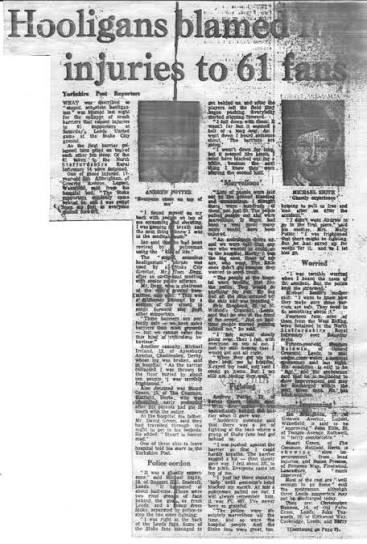
“The air was full of dust and fear. I couldn’t breathe properly, and the roar of the crowd had turned into screams and cries. A copper appeared out of nowhere, dragging people out by their coats, shouting for stretchers. I saw one bloke carried away on a door panel, blood streaming down his face. The pitch looked like a battlefield. After what felt like an eternity, the crush eased. The barrier was gone — twisted metal and splintered timber lying across the walkway. There were boots, scarves, even a string vest stuck in someone’s shirt button. A few of the Leeds lads were sitting dazed against the wall, faces grey. One of them looked up at me and said, “Thanks, mate.” I didn’t know what to say. We stayed there, helping where we could, passing injured fans down toward the tunnel where the St John’s lads were working flat out. You don’t forget things like that — the look of sheer terror on people’s faces. It wasn’t football anymore; it was chaos. I remember thinking someone was going to die. Somehow, the game carried on. The Boothen was quieter than I’d ever known it. We scored first, but then Dennis Smith nicked an equaliser for us in the last minute. When the whistle went, the tension boiled back up. All that fear turned to anger again. The Leeds fans had started it, and we weren’t about to let them walk out of Stoke thinking they’d won anything.”
Outside The Ground
“Outside the ground, it was mayhem. The coppers were trying to shepherd everyone away, but the Leeds mobs were scattered all over. We spotted about twenty of them near the canal, giving it large, throwing stones at a bus. Mick and Tommy went charging after them, and I followed. Fists were flying, boots swinging, lads slipping in the mud. I caught one square on the jaw, and he went down, but before I could move, a police dog came out of nowhere — big Alsatian — sank its teeth into my leg. I screamed and swung round, trying to shake it off, and the handler finally pulled it back, shouting something about “bloody animals, the lot of you!” The copper dragged me off to the side, leg bleeding through my jeans. He was shaking his head, saying we were all idiots. Maybe he was right. But standing there, watching the Leeds coaches being pelted with bricks as they tried to leave, I still felt that burning rage. They’d come to take the Boothen — and look what had happened. People nearly died because of it.”
“Later that night, back at the pub, the talk was quieter. We’d heard some of the Leeds fans were in hospital — one with a busted collarbone, others with broken ribs. No one celebrated it. Even the hardest lads just stared into their pints. The fight had gone out of us a bit. I kept seeing that kid’s face in the crush — the one I’d pulled free. Every time I closed my eyes, it was there. For weeks after, the papers were full of it — pictures of Leeds fans in hospital beds, smiling like they’d survived a war. Maybe they had. The Boothen was never quite the same after that. There was a new chant — “Ooh watch the barriers!” — but behind the humour there was something darker. We all knew how close it had come. Looking back now, it was madness. No segregation, no real control, just raw passion and pride turned violent. But I’ll tell you this — no matter how close it came, the Boothen stayed ours that day. Leeds might’ve tried to take it, but they left battered, bloodied, and lucky to be alive. And me? I’ve still got the scar on my leg from that dog to prove it.”
The Aftermath
We thank Steve and Carl for their recollections. It’s clear that Leeds were definitely in the Boothen in big numbers, but what happened next was symbolic of the 70s, with dodgy terracing and rusty old barriers not fit for purpose. Isn’t it a wonder this sort of accident didn’t happen more often?
Thanks for visiting, please leave comments if you remember this match and the incident. Also, please share our article, as it really helps our website grow, to give you bigger better content. And have you watched our previous article? Millwall vs Hibs 1990: Bushwackers vs CSShttps: Until the next article, bye for now.
📺 Watch the Original Video
If you enjoyed this article, watch the full story from The Terrace Archive below.