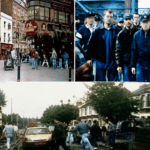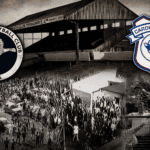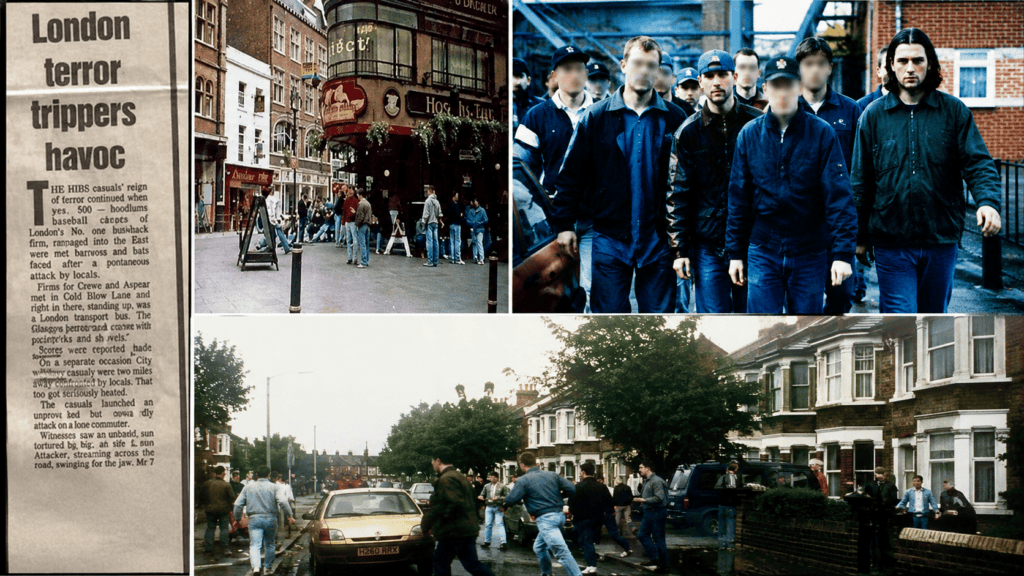
Everton vs Millwall 1973, and an epic encounter between Everton and Millwall in the F.A.Cup, no, not the football which Millwall won 2-0, but the fighting and stabbings that marred the game and created over 5o years of hatred between the two firms involved, the Millwall Bushwackers and the Everton Gwladys Street mob, now known as the County Road Cutters. Let’s get straight onto the stories.
Everton County Road Cutter Ex-member Joe told us “The FA Cup always meant something special, and when Millwall came out of the hat, nobody expected an easy afternoon. We’d heard they’d been building a name for themselves down in London, giving it large against clubs around the capital, and a few of the lads laughed when the papers mentioned nearly two thousand of them travelling north. “They’ll get a welcome up here,” someone joked outside the Winslow before we walked towards Goodison. There was confidence rather than arrogance. Everton had one of the biggest home followings in the country and everyone knew our patch wasn’t somewhere you wandered into expecting to throw your weight about. As we got nearer the ground rumours were already flying that there’d been bother in the city centre, although nobody knew what was true. One thing was certain though; if Millwall fancied making a name for themselves in Liverpool, they’d picked the wrong city. We honestly couldn’t believe they’d even consider trying it against Everton on our own doorstep.”
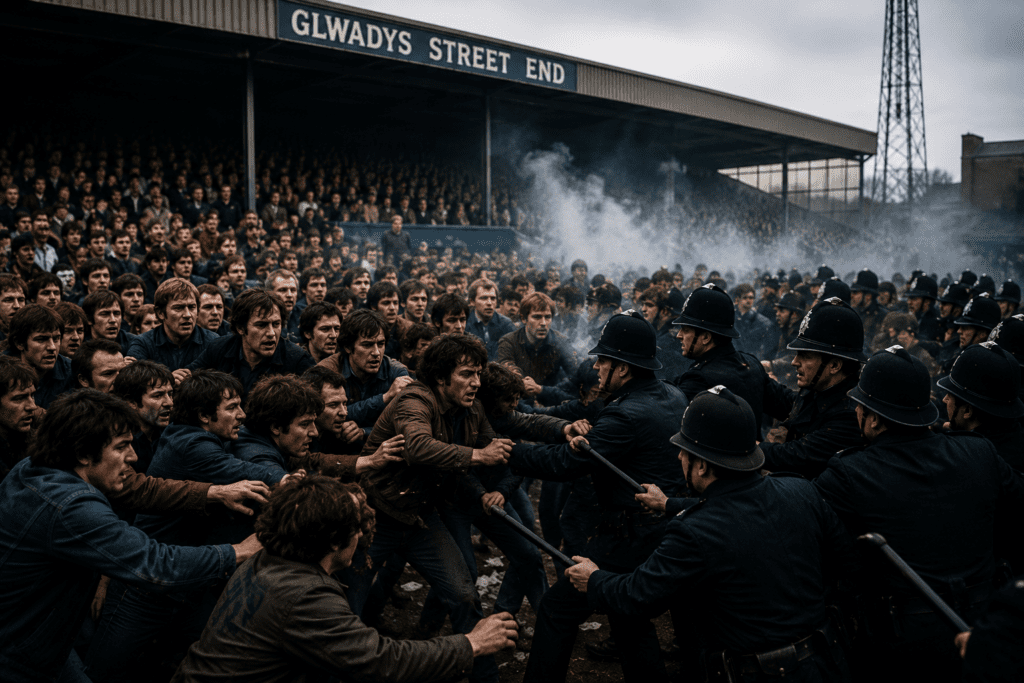
“What happened next still doesn’t make sense all these years later. Instead of keeping the visitors together, the police began feeding little pockets of Millwall supporters through different turnstiles. Looking back, it was asking for trouble. I was halfway down the Gwladys when someone suddenly shouted, “There’s Millwall in here!” We all turned and there they were, maybe fifty of them, looking completely bewildered. Some had scarves tucked away, others wore the fashionable sheepskins and Crombies that were becoming popular, but they clearly knew something wasn’t right. For a split second nobody moved. Then people started rushing down the steps from every direction. The first thing I remember thinking wasn’t anger, it was disbelief. Had they really come into the Gwladys? Had nobody warned them whose end they were walking into? They looked hopelessly outnumbered before a punch had even been thrown. It wasn’t bravery or stupidity anymore; it felt like they’d walked straight into a trap.”
“The noise became deafening as hundreds piled towards the bottom of the stand. Fists were flying everywhere, people slipping over barriers and trying to push back towards the exits, but there was nowhere to go. I lost sight of my mates almost immediately. Then I noticed a young Millwall lad trying desperately to climb the fence into the Boys’ Pen to escape the crush below. He never made it over. He was being stabbed as he tried to deperately climb the fence. That image has stayed with me longer than anything else from that day. Up until then it had felt like the usual football chaos we’d all grown up with, but suddenly it became obvious weapons were involved. You heard cries that were different from someone taking a punch. A couple of Everton lads beside me actually stopped and looked shocked. One muttered quietly, “This has gone too far.” I remember seeing a stocky blond Millwall bloke in a sheepskin, covered in blood but still trying to charge back towards the crowd after his mates. Whether it was courage or madness I couldn’t tell, but I never forgot him.”
“Eventually the police moved in, although most of us thought they’d stood back far too long. Stretchers appeared and injured lads were carried away while rumours spread around the terraces faster than the truth ever could. Somebody claimed two Millwall supporters had been killed. Another insisted dozens had been stabbed. Nobody really knew, and the football almost became an afterthought. We actually lost the match, but I can barely remember anything that happened on the pitch because everyone around me spent the entire game talking about what they’d just seen beneath the stand. Looking back now, I don’t think many Everton supporters took any pride in what had happened. Defending your own end was one thing, but watching teenagers and ordinary football supporters caught in the middle because of dreadful policing was something else entirely. It left a horrible feeling that stayed with me long after the final whistle had blown.”
“After the match word spread that around a hundred Millwall lads were gathered at Lime Street Station looking for revenge before heading back to London. Plenty of Everton lads drifted that way, not because anyone organised it, but because that’s simply where everybody expected the day to finish. The atmosphere around the station was electric. Across the concourse groups faced each other, shouting across lines of police. For all the stories told over the years, one thing I’ll always admit is this: those Millwall lads didn’t all run. They were massively outnumbered, especially once other local lads arrived, but many stood where they were and had another go regardless. It didn’t end well for them, yet there was a stubbornness about them that even some Everton supporters quietly respected. Eventually the police forced everyone apart and bundled people onto trains, but by then another chapter had been added to what was already becoming a bitter rivalry.”
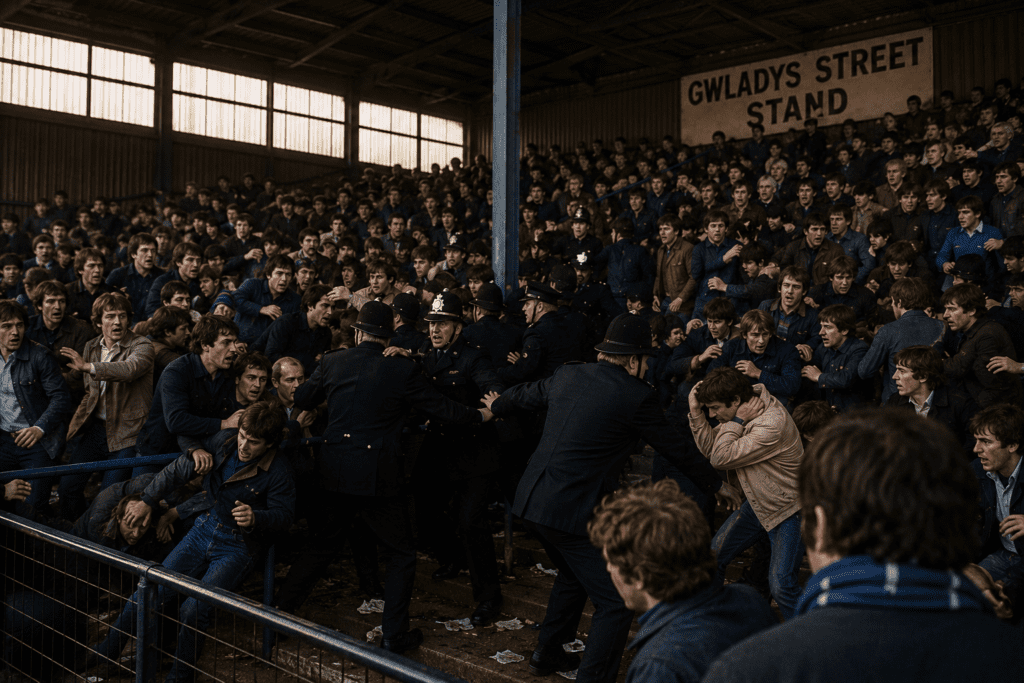
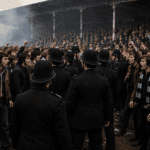
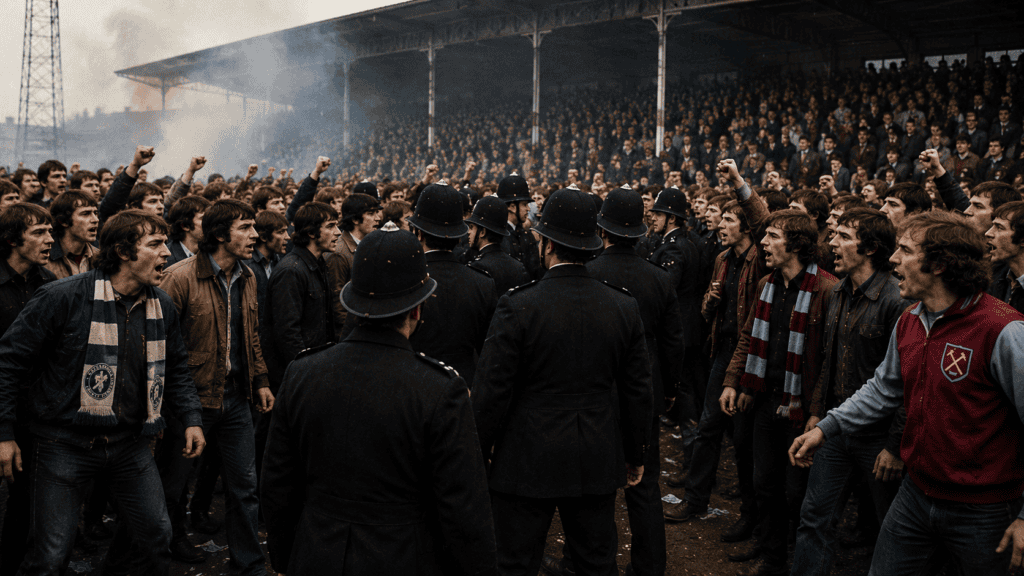
AI Reconstructed Scene Of The
Millwal Invasion Of Gwladys Street Stand
“More than fifty years have passed, yet people still ask why Everton and Millwall dislike each other so much. They think it began with modern football, but it didn’t. It began outside a turnstile because of one catastrophic decision that should never have happened. Nobody died, despite the stories that spread afterwards, but plenty went home carrying scars that lasted a lifetime. The football itself has long been forgotten, while that afternoon lives on every time the clubs are drawn together. I still believe Millwall underestimated what awaited them. They’d earned a fearsome reputation around London, but Goodison Park was a different world altogether. Walking into the Gwladys wasn’t going to frighten thousands of Everton supporters; it was always going to provoke them. Looking back as an old man now, I don’t remember the score. I remember the confusion, the fear, the mistakes, and the moment a rivalry was born that neither club has ever truly managed to leave behind.”
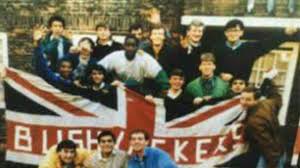
Millwall fan Tony told us…”I’d only been following Millwall away for a couple of years when we were drawn against Everton in the FA Cup. We’d built a reputation around London by then, and there was plenty of confidence on the coaches heading north. We’d had a few lively trips, and some of the older lads reckoned Liverpool would be no different. Looking back now, that was youthful arrogance talking. We were used to facing clubs with crowds half the size of Everton’s, not one of the biggest clubs in England on their own patch. Still, when you’re seventeen, you don’t think like that. You think you’re ten feet tall. There were songs all the way up the motorway and plenty of talk about showing the Scousers what Millwall were about. We arrived in the city to plenty of shouting and a few minor scuffles, nothing unusual for the time. The real trouble hadn’t even started, but none of us realised we were walking into a day that supporters would still be talking about half a century later.”
“The first thing that puzzled us was the police. Instead of keeping us together, they bundled us onto buses before marching small groups towards different entrances around Goodison. It made no sense. Most of the recognised lads weren’t even with us. I was surrounded by younger supporters, fathers with sons and blokes who’d simply come to watch an FA Cup tie. We trusted the police when they pointed us towards a set of turnstiles and told us to go through. Only after we’d climbed the steps did we realise something was badly wrong. Everywhere we looked were blue scarves. Somebody behind me quietly muttered, “This can’t be right.” Seconds later shouting echoed down the stand. Everton supporters had spotted us. You could almost feel the atmosphere change. In that instant we knew we hadn’t marched into the away end at all. We’d been sent straight into the heart of the Gwladys Street, surrounded by thousands of home supporters with nowhere to retreat.”
“Everything happened so quickly it’s difficult to separate memory from confusion. The first wave came charging down the steps before we’d even worked out an escape route. We tried standing together, but there simply weren’t enough of us. People were being pushed in every direction and the exits disappeared behind bodies. I remember one of our lads trying to climb the fence into the Boys’ Pen to get clear of the crush, only to be dragged back into the crowd. That’s an image I’ll never forget. Then the mood changed again. This wasn’t just fists anymore. There were people shouting that weapons were being used and panic spread faster than the fighting itself. I saw one of our older lads, covered in blood, refusing to leave despite his mates dragging him backwards. Another young supporter collapsed clutching his chest and suddenly football meant absolutely nothing. We hadn’t come looking for this. Whatever people have said over the years, most of us in that group weren’t expecting to be abandoned in the middle of Everton’s home end with no protection whatsoever.”
“Eventually the police forced their way between the two groups, but for many of us it felt far too late. Ambulances arrived and injured supporters were carried away while rumours spread that several lads had been killed. Thankfully that wasn’t true, although some came frighteningly close. I later found out one of our younger supporters needed emergency surgery after being stabbed in the chest. The football itself passed in a blur. I couldn’t have told you who scored or how anyone played because everyone around us was still trying to make sense of what had happened beneath the stand. Looking back, I don’t blame every Everton supporter. If strangers suddenly appeared inside our end at the Old Den, we’d have reacted as well. What I never forgave was the way the police split us into tiny groups and directed us to the wrong place. That one decision turned what should have been a hard afternoon into complete chaos, and ordinary supporters paid the price alongside the lads who’d come expecting trouble.”
“After the match, anger replaced shock. Nobody wanted to head back to London feeling we’d simply taken a hiding without standing our ground. Around a hundred of us gathered near Lime Street Station, determined that if any Everton lads fancied another go, we’d be ready this time. Some Manchester City supporters, travelling home after their own cup tie, joined us for a while, although when things started kicking off many disappeared as quickly as they’d arrived. We were left badly outnumbered once again, but nobody I was with wanted to run. Looking back now it was probably pride more than sense. There were more shouts, more punches and another frantic scramble before the police finally separated everyone and pushed us towards the trains. The journey home was quieter than the one north. Nobody was boasting anymore. We weren’t talking about football either. We were counting who’d made it back, wondering how some of the injured lads were getting on, and trying to understand how the day had unravelled so catastrophically.”
“People often ask why Millwall supporters still mention Everton whenever old rivalries are discussed. It isn’t because of ninety minutes of football. It’s because of February 1973. We travelled north believing our reputation would carry us anywhere, but Goodison Park taught us a harsh lesson. Everton weren’t some small club we’d intimidate with a few hundred travelling lads. They had thousands behind them and one of the fiercest home followings in the country. We underestimated that completely. Even so, I’ll always believe the disaster could have been avoided if the police had simply kept the supporters apart instead of marching us into the wrong end. Nobody died that day despite the stories that still circulate, but enough lives were changed forever. Whenever the clubs have met since, memories of that afternoon have returned. Some rivalries are born on the pitch. Ours was born beneath a stand because of one dreadful decision, and fifty years later the bitterness still hasn’t disappeared.”
We thank Joe and Tony for their recollections. It’s clear that Millwall were sent into the Everton home end either by mistake or by some very naughty Scouse copper. Surely they weren’t mad enough to actually try to “take” the Gwladys street end? But hey, nothing surprises us anymore does it?.
Thanks for visiting. Please use the search facility to browse for more Millwall & Everton stories. Have you viewed our previous article? Arsenal, Leeds & Chelsea vs Galatasaray | Football’s Most Unlikely Alliance. Until the next article, bye for now.
📺 Watch the Original Video
If you enjoyed this article, watch the full story from The Terrace Archive below.